
From Literacy Policy to Preparation Practice
EdPrep Insight | Fall 2026
From Literacy Policy to Preparation Practice
How Delaware is Connecting Science of Reading Reviews, Prioritized Shifts, and Technical Assistance to Strengthen Candidate Readiness for Quality Literacy Instruction
Overview & Section Guide
Strengthening Preparation Before Teachers Enter P-12 Classrooms
Delaware’s statewide literacy work reflects a challenge many states are facing: how to move from reading policy and statewide expectations into the preparation experiences future teachers actually receive.
Policy can set the expectation. Preparation turns that expectation into candidate experience.
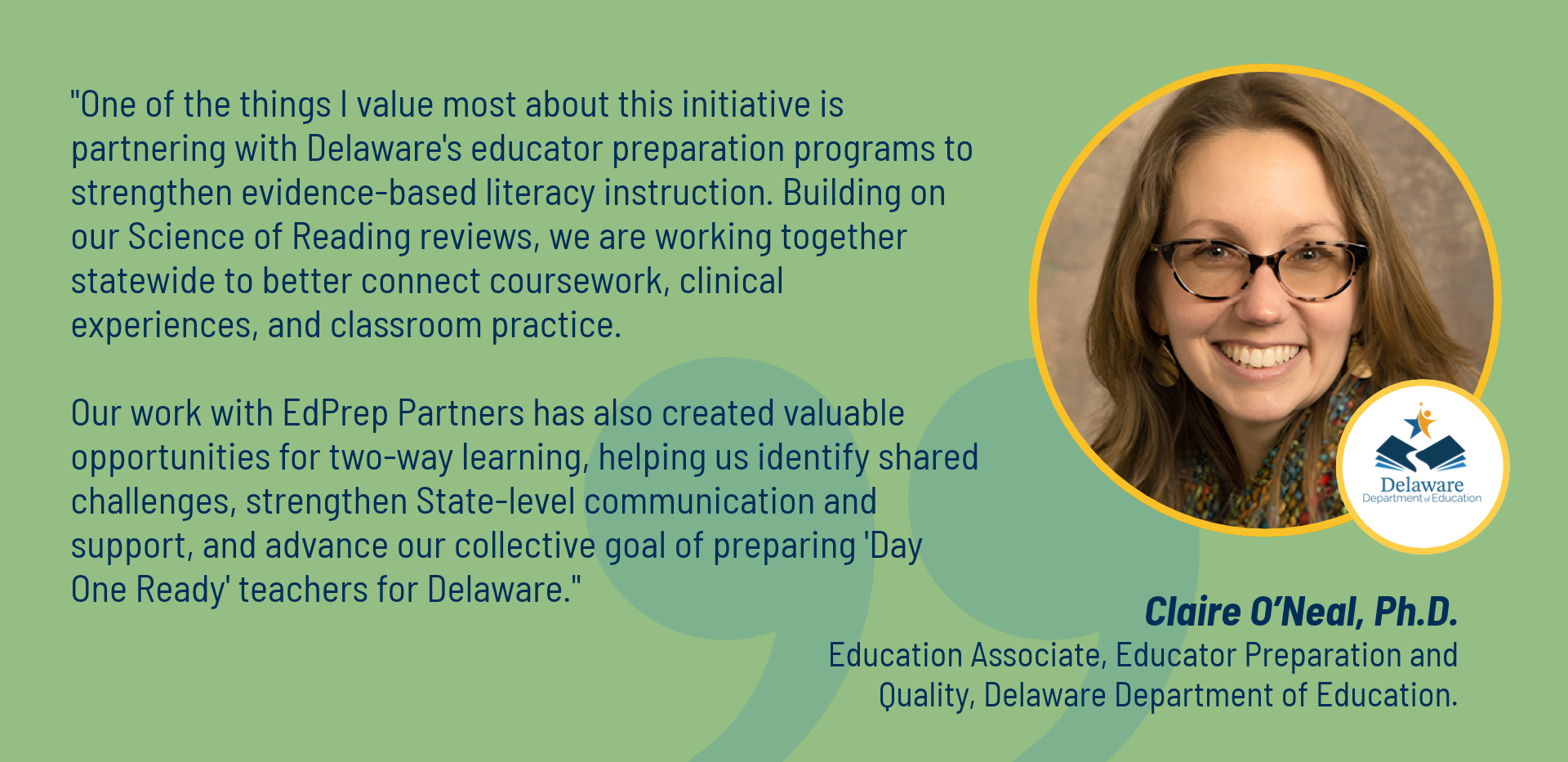
Building on the evidence-based reading instruction requirements established through Senate Bill 133 and the review process established through Senate Bill 252, the Delaware Department of Education and the state’s educator preparation programs have paired statewide Science of Reading reviews with Strategic Action Planning and targeted technical assistance.
The goal is not a review process that ends with a report. The goal is to use evidence to strengthen preparation practice.
Alignment is progress. Readiness requires candidate practice and feedback.
Future teachers need preparation systems that help them build literacy knowledge, understand how students learn to read and write, analyze instruction, rehearse evidence-based practices, enact those practices with students, receive feedback, use student data, and demonstrate readiness before day one.
In Delaware, the review process creates the evidence base. Strategic Action Planning helps programs translate that evidence into focused implementation decisions. Technical assistance helps programs strengthen the courses, tools, routines, feedback cycles, and support structures that shape candidate experience.
EdPrep Partners is grateful to support the Delaware Department of Education and Delaware’s educator preparation programs in this work. Our role is to help partners examine preparation in practice, identify high-leverage priorities, and build the tools, routines, and support structures needed to implement and sustain stronger candidate development across programs and over time.
From Statewide Expectations to Candidate Readiness
Across the country, states are strengthening expectations for evidence-based reading instruction through legislation, standards, professional learning, instructional materials, licensure expectations, and program accountability.
Those moves create direction. They also raise the implementation question at the center of teacher preparation: How will these expectations reach future teachers before they enter classrooms?
As EdPrep Partners explores in From Reading Foundations to Candidate Readiness , the next phase of reading reform is not only about whether preparation programs are aligned to scientifically based reading instruction. It is about whether that alignment becomes candidate practice, feedback, and readiness.
For educator preparation programs, implementation lives in the experiences candidates receive across coursework and clinical practice. Candidates need to understand the research base behind effective reading and writing instruction. They also need structured opportunities to see effective instruction modeled, analyze instructional decisions, rehearse specific teaching moves, receive feedback, apply those practices with students, and demonstrate readiness over time.
That kind of preparation does not happen through one course, one assignment, one clinical placement, or one final assessment. It requires a connected system.
Coursework matters. Clinical experiences matter. Faculty and clinical supervisor practice matters. Mentor teacher feedback matters. Candidate assessment matters. Data routines matter. Program leadership matters. P-12 partnerships matter.
When these pieces reinforce one another, candidates are more likely to experience a coherent path toward readiness. When they operate separately, candidates may encounter strong literacy content in one part of the program without enough opportunity to practice, receive feedback, and apply that knowledge in another.
Delaware’s work starts from that implementation reality. The question is not simply whether programs value evidence-based literacy instruction. The question is whether candidates experience preparation that helps them build and demonstrate it.
What Literacy Preparation Must Develop
States can define expectations for structured literacy through legislation, guidance, and professional learning investments. But in reality, you cannot improve literacy without improving preparation. Ask Mississippi.
Literacy preparation has to do more than cover the science of reading. It has to help candidates develop the knowledge, understanding, and teaching practice required to support students as readers and writers.
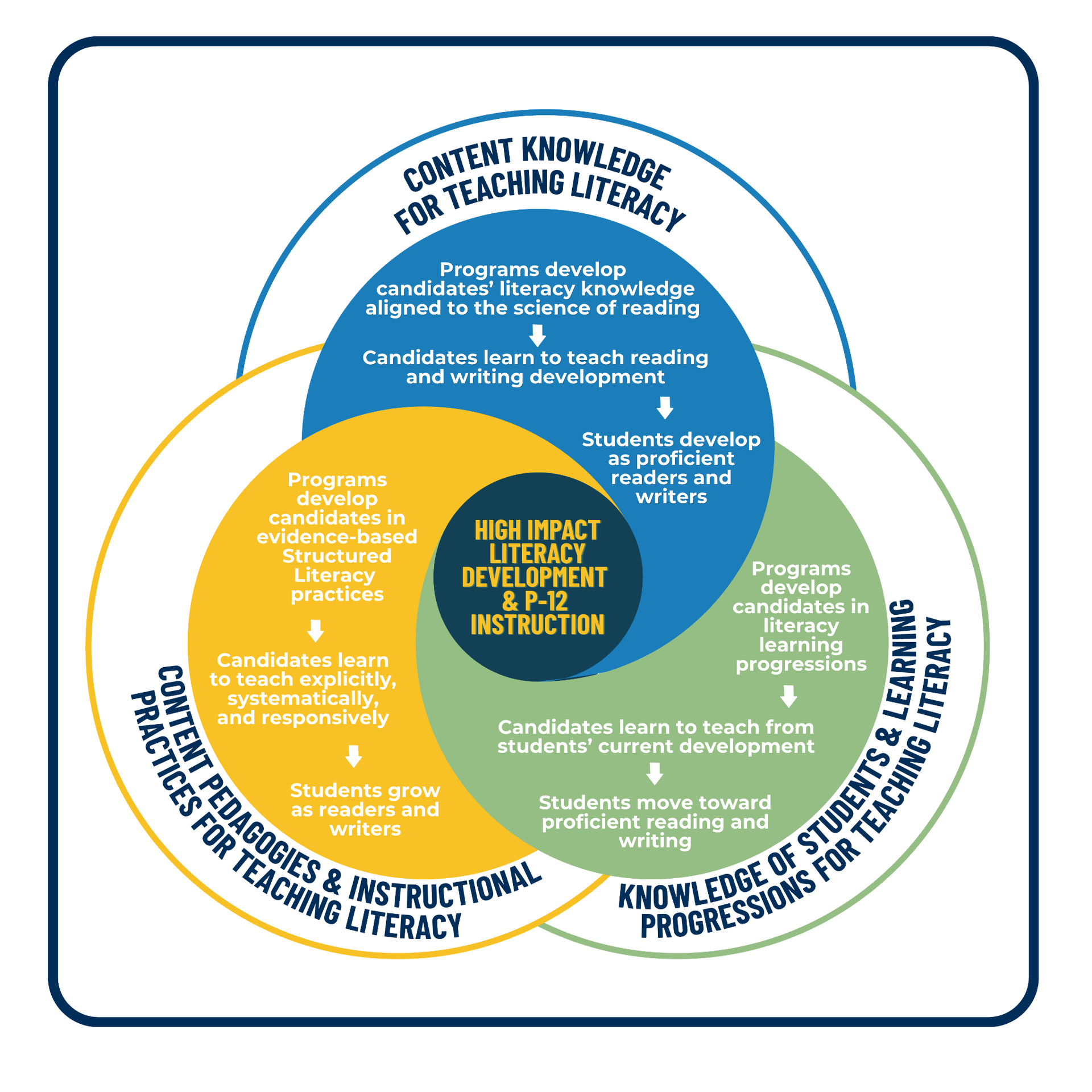
Content Knowledge for Literacy Development: The literacy knowledge and skills candidates need to teach reading and writing effectively, including the essential components of reading.
Student Learning Progressions in Literacy: Candidates’ understanding of how students develop as readers and writers, and how to use that understanding to plan instruction.
Evidence-Based Literacy Pedagogies and Practices: Candidates’ ability to analyze, rehearse, teach, and receive feedback on evidence-based literacy instruction aligned to the science of reading.
A strong literacy preparation system develops three connected dimensions: what candidates know about reading and writing, how they understand student literacy development, and how they enact evidence-based instruction with practice and feedback.
For Delaware’s review and technical assistance work, these dimensions provide a useful lens for examining whether statewide expectations are becoming candidate experience.
These dimensions have to work together. Candidates need to know what to teach, understand how students develop, and practice how to teach in ways that are explicit, systematic, responsive, and grounded in evidence.
In Delaware, that is why the review and technical assistance cycle looks beyond whether literacy content appears in a course. The work examines whether candidates have repeated, supported opportunities to connect knowledge to practice across coursework, clinical experiences, teacher educator feedback, candidate assessment, and program improvement routines.
What Program Performance Reviews Make Visible
Program reviews are most useful when they help partners see preparation as candidates experience it.
A syllabus can show what a course intends to teach. An assignment can show what candidates are asked to produce. An observation can show how coursework, supervision, or candidate instruction is enacted. A stakeholder conversation can show how faculty, clinical supervisors, mentors, candidates, graduates, program leaders, school leaders, and district partners experience the system.
Artifacts show how preparation is designed. These may include course syllabi, assignments, instructional materials, observation tools, candidate work samples, faculty training materials, assessment tools, and data routines.
Observations show how preparation is enacted. These may include coursework sessions, clinical supervision cycles, candidate instruction, and feedback conversations.
Structured stakeholder conversations connect program design to the lived experiences of stakeholders. Faculty, clinical supervisors, mentors, candidates, graduates, program leaders, school leaders, and district partners help clarify how preparation is experienced and where systems are working or need support.
No single source tells the full story.
That matters because implementation depends on confidence. Programs need to know which patterns are significant, which opportunities are highest leverage, and which shifts are most likely to strengthen candidate experience.
The focus is not one person, one course, one lesson, or one clinical placement. The focus is the preparation system candidates move through.
For Delaware, that meant looking across the systems that shape literacy readiness: course design and assignments; clinical experiences; teacher educator modeling, coaching, and feedback; observation and performance tools; candidate work and performance evidence; data routines; and P-12 partnership structures.
Delaware’s Review-to-Technical-Assistance Cycle
Delaware’s Science of Reading work is best understood as an implementation cycle, not a review-and-report exercise.
The reviews created a statewide evidence base about how literacy preparation is designed, enacted, and experienced across Delaware’s educator preparation programs. Program-level findings and prioritized recommendations then informed Strategic Action Planning, technical assistance design, resource planning, and implementation monitoring.
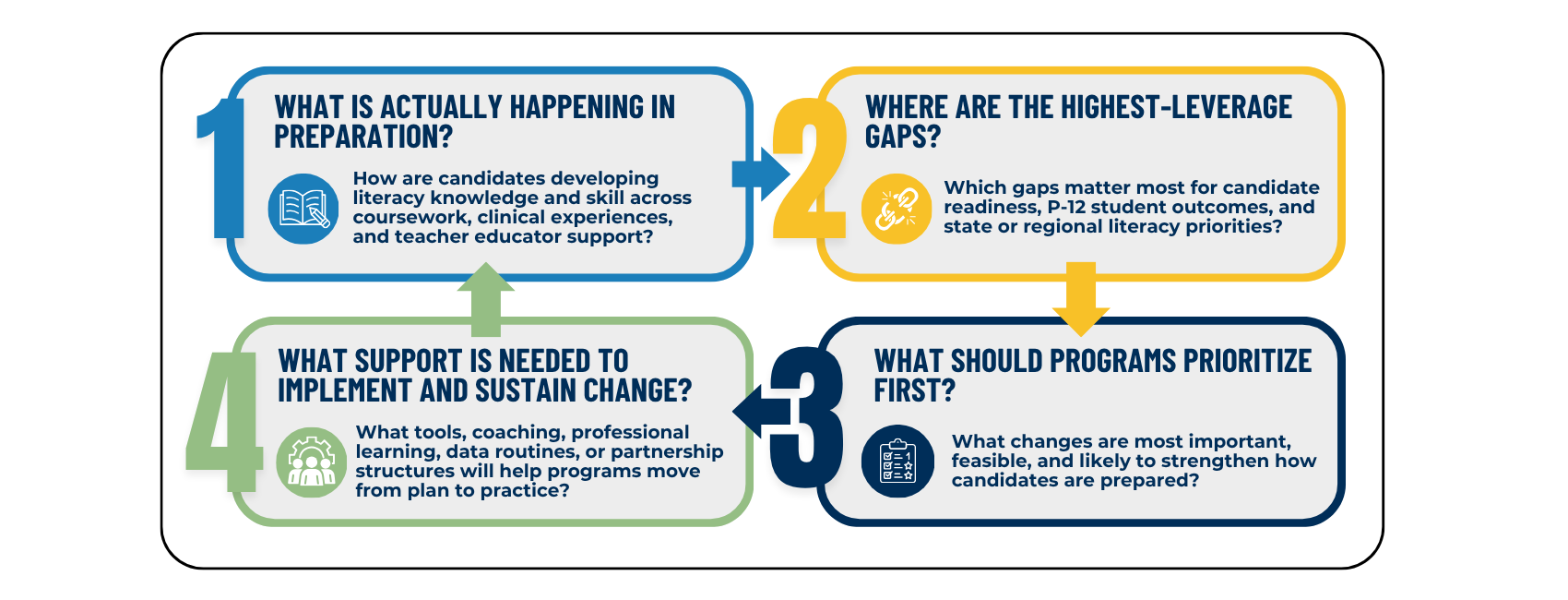
These questions keep the work connected to implementation: understand what candidates experience, identify the highest-leverage gaps, decide what to prioritize, and name the supports needed to move from plan to practice.
The cycle moves in three connected ways.
Review evidence. Programs and review teams look across artifacts, observations, stakeholder conversations, candidate work, performance data, and program documentation to understand preparation in practice.
Prioritize shifts. Findings are translated into prioritized recommendations and Strategic Action Planning decisions. The work is to choose the few shifts most likely to strengthen candidate readiness, not to create a list of everything that could improve.
Support implementation. Technical assistance helps programs build, test, refine, and sustain the changes named in their plans. This may include coursework mapping, structured candidate practice opportunities, literacy-specific look-fors, coaching and feedback routines, data routines, and P-12 partnership alignment.
This sequence protects the purpose of the work. Statewide synthesis supports learning and technical assistance design across Delaware, while program-level reports and Strategic Action Plans remain the primary sources for program-specific evidence, priorities, and implementation plans.
What Technical Assistance Helps Programs Build
Findings are useful when they lead to focused action.
A finding can identify a typical pattern in preparation. A prioritized recommendation can name a high-leverage shift. But neither changes candidate experience by itself.
That is where technical assistance matters.
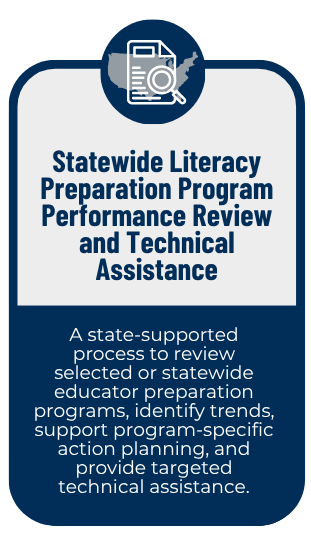
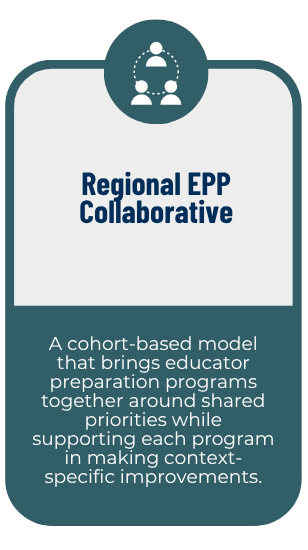
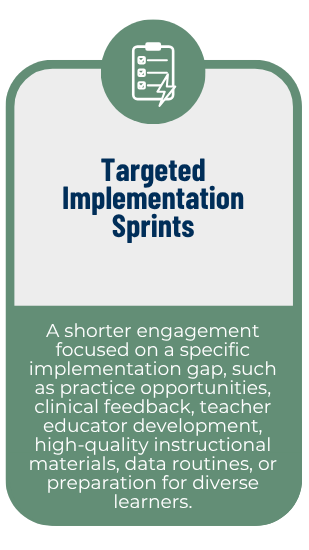
In Delaware’s cycle, technical assistance is designed to help programs move from evidence and priorities into practical changes in how candidates are prepared. Through Strategic Action Planning, programs clarify what they will prioritize first, who will own the work, what will be built or revised, what evidence will show progress, and what support is needed.
That focus is important.
Educator preparation programs work within real constraints: faculty time, clinical capacity, institutional systems, accreditation expectations, state requirements, and district partnership needs. A broad list of recommendations can create activity without changing candidate experience. Focus helps programs stay with the few shifts most likely to strengthen readiness.
Technical assistance can support programs in building or refining:
- Coursework maps, course content, and assignments that make evidence-based literacy expectations visible across the program
- Structured candidate practice cycles where candidates analyze, rehearse, enact, receive feedback, and refine evidence-based literacy instruction
- Literacy-specific look-fors, observation tools, coaching protocols, and feedback routines
- Professional learning and calibration for faculty, clinical supervisors, and mentor teachers
- Stronger clinical connections so coursework expectations are reinforced in field-based practice
- Preparation with high-quality instructional materials, including opportunities for candidates to understand, internalize, adapt, and use materials effectively
- Data routines that connect coursework evidence, clinical evidence, candidate performance, teacher educator practice, and program improvement
The work is practical. It lives in revised assignments, clearer observation tools, stronger feedback conversations, more intentional clinical connections, better calibration, and routines that help programs see whether changes are taking hold.
The goal is not to add another initiative to preparation. It is to strengthen the systems that shape candidate development, so improvements can be implemented, monitored, refined, and sustained over time.
What Delaware Offers the Field
Delaware’s work offers practical lessons for state leaders, educator preparation programs, and partners working to strengthen literacy preparation.
1. Start with clear expectations
States need clear expectations for what candidates should know, practice, and demonstrate in literacy instruction. Those expectations should be specific enough to guide review, action planning, technical assistance, and progress monitoring.
A clear benchmark does not replace program context or professional judgment. It creates a shared reference point for improvement.
2. Examine preparation as candidates experience it
Literacy preparation does not live in one course, one assignment, or one clinical experience. It lives across coursework, clinical practice, teacher educator modeling, coaching and feedback, candidate assessment, data routines, and P-12 partnerships.
The question is whether those parts of preparation reinforce one another over time.
3. Use evidence from multiple sources
Artifacts show how preparation is designed. Observations show how preparation is enacted. Stakeholder conversations show how the system is experienced.
Together, these evidence sources help programs see the difference between what is intended, what is enacted, and what candidates experience.
4. Prioritize the shifts that matter most
Programs cannot improve everything at once. Findings should lead to a focused set of priorities that are sequenced by leverage, feasibility, and relationship to candidate readiness.
Focus protects the work. It helps programs move from broad improvement goals to concrete shifts in preparation practice.
5. Treat technical assistance as part of implementation
A review can create clarity. Technical assistance helps turn clarity into implementation.
Programs need support to build tools, revise routines, develop teacher educators, monitor progress, and sustain changes over time. Without that support, even strong findings can remain on paper.
6. Protect partnership and trust
Strong review and technical assistance processes require clear boundaries. Programs, district partners, candidates, and teacher educators need to understand the purpose of the work, what is being examined, and how evidence will be used.
Confidentiality, role clarity, and communication help create the conditions for candor and shared ownership. That matters when the goal is improvement, not compliance alone.
From Review to Stronger Candidate Experiences
Delaware’s work shows how states can connect literacy expectations to preparation practice.
The strongest evidence of impact will come as programs implement priorities, monitor progress, refine tools and routines, and strengthen what candidates experience across coursework and clinical practice.
For the field, Delaware offers a clear lesson: improving literacy preparation requires attention to the systems that shape future teachers before they enter classrooms.
Every child deserves an excellent educator. Every teacher candidate deserves preparation that equips them to become one.
Let’s make teacher preparation better together.
Stay Connected
If you're interested in learning more, exploring collaboration or technical assistance, or just want to catch up, we’d love to connect:

About EdPrep Partners
Elevating Teacher Preparation. Accelerating Change.
EdPrep Partners is a national technical assistance center and non-profit. EdPrep Partners delivers a coordinated, high-impact, hands-on technical assistance model that connects diagnostics with the support to make the changes. Our approach moves beyond surface-level recommendations, embedding research-backed, scalable, and sustainable practices that most dramatically improve the quality of educator preparation—while equipping educator preparation programs, districts, state agencies, and funders with the tools and insights needed to drive systemic, lasting change.