From Reading Foundations to Candidate Readiness
How States and Regions Can Strengthen Literacy Preparation Through Review, Action Planning, and Implementation Support
Helping States and Regions Strengthen Literacy Preparation
Day One Readiness Should Not Be a Mystery
The 2026 National Council on Teacher Quality Reading Foundations sends an important signal to the field: teacher preparation programs are making real progress in aligning coursework to scientifically based reading instruction, but alignment alone is not the finish line.
The next phase of reading reform is implementation.
States have passed reading laws. Districts are adopting stronger materials. Educators are receiving professional learning. At the same time, many future teachers still need more structured opportunities to practice the reading instruction they will be expected to use with students.
Future teachers need more than exposure to the science of reading. They need preparation systems that help them build literacy knowledge, understand how students learn to read and write, analyze instruction, rehearse evidence-based practices, enact those practices with students, receive feedback, use student data, and demonstrate readiness before day one.
Alignment is progress. Readiness requires candidate practice and feedback.
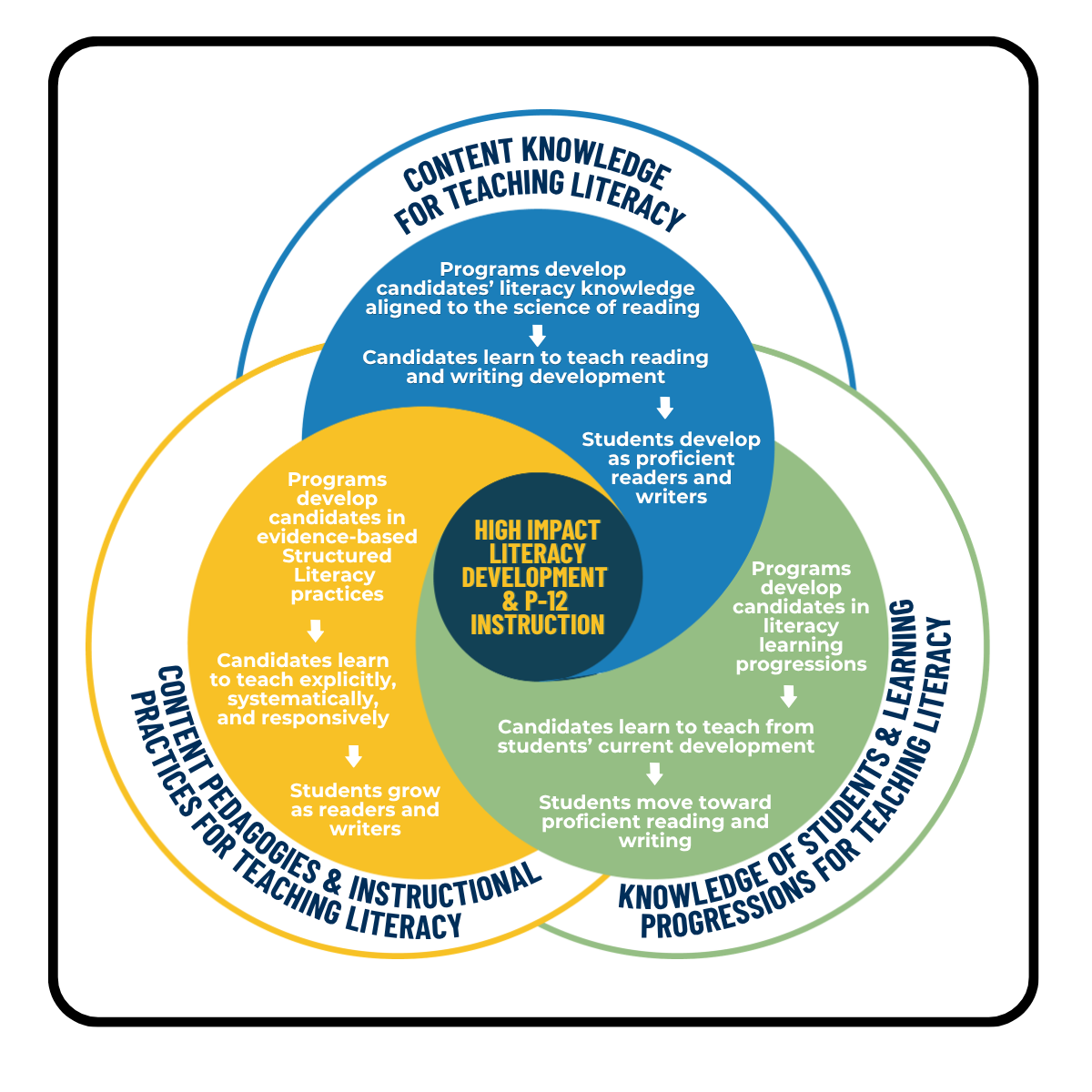
EdPrep Partners’ literacy framework centers the interaction of literacy content knowledge, student learning progressions, and evidence-based literacy pedagogies and practices – the preparation conditions that support high-impact literacy development and P-12 instruction.
That is where EdPrep Partners works alongside states, regions, and programs: helping turn alignment into development, and development into readiness for students' future teachers.
Content Knowledge for Literacy Development: The literacy knowledge and skills candidates need to teach reading and writing effectively, including the essential components of reading.
Student Learning Progressions in Literacy: Candidates’ understanding of how students develop as readers and writers, and how to use that understanding to plan instruction.
Evidence-Based Literacy Pedagogies and Practices: Candidates’ ability to analyze, rehearse, teach, and receive feedback on evidence-based literacy instruction aligned to the science of reading.
What NCTQ’s Review Signals for States and Regions
NCTQ’s review points to both progress and unfinished work. More programs are aligning coursework to scientifically based reading instruction, which creates a stronger foundation for future teachers to learn evidence-based reading instruction and, over time, contribute to stronger outcomes for students.
The next opportunity is ensuring alignment shows up in candidate practice and feedback.
The review also highlights persistent gaps in preparation for English learners, struggling readers, students with dyslexia, and students who speak English language varieties other than General American English. These findings reinforce an important lesson for the field: strong literacy policy can be reinforced by strong preparation systems.
Standards matter. Licensure expectations matter. Course alignment matters. Candidates become ready through the quality of the developmental experiences they receive across coursework, clinical practice, teacher educator modeling, coaching and feedback, assessment use, high-quality instructional materials, and continuous improvement routines.
The work ahead is helping educator preparation programs move from stated alignment to candidate-ready practice.
What States and Regions Can Support
The strongest state and regional strategies do not treat program review as the endpoint. They use review as the beginning of a focused improvement cycle.
That cycle should help programs move from evidence to action with enough clarity to prioritize what matters most and enough support to make those priorities real in coursework, clinical experiences, teacher educator practice, and program improvement routines.
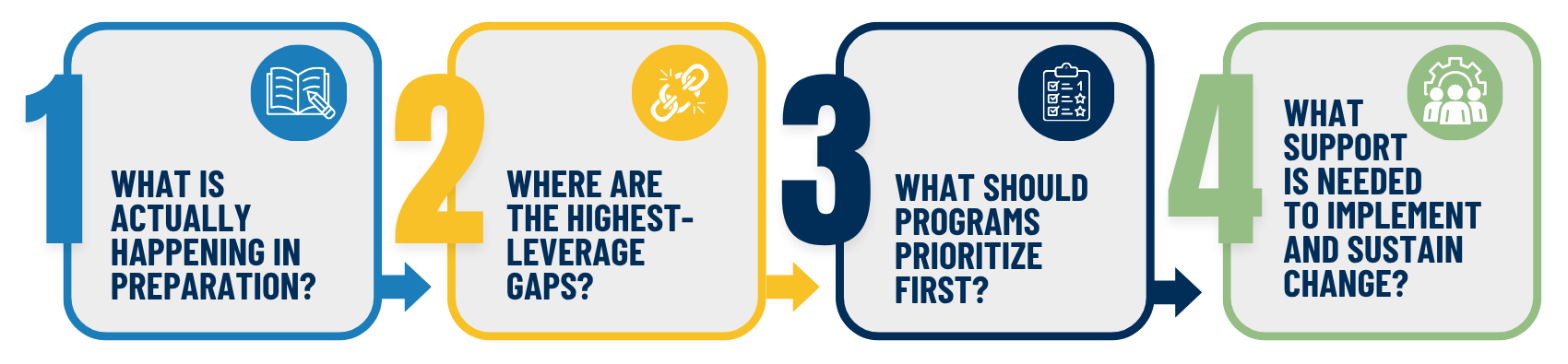
A strong approach helps programs and partners answer four practical questions:
How EdPrep Partners Helps
EdPrep Partners works alongside state departments, regional collaboratives, funders, and educator preparation programs to move from literacy expectations to candidate-ready practice.
Our approach is straightforward: Review evidence. Prioritize shifts. Support implementation.
1. Reviewing Preparation Approaches and Sharing Findings
EdPrep Partners conducts Literacy Program Performance Reviews that examine how preparation operates in practice.
We look across the systems that shape candidate readiness, including coursework, clinical experiences, teacher educator practices, observation and feedback, candidate performance, data routines, and P-12 partnerships. These reviews go beyond checking whether the science of reading appears in syllabi. They examine whether candidates have meaningful opportunities to analyze, rehearse, enact, and receive feedback on evidence-based literacy instruction.
Review teams gather evidence through artifacts, observations, interviews, candidate work, performance data, and program documentation. Findings reflect recurring patterns across multiple sources of evidence, not isolated examples.
The result is a clear, evidence-based understanding of program strengths, gaps, and the shifts most likely to improve candidate readiness.
2. Prioritizing the Shifts that Matter Most
Sustainable improvement depends on focus.
After findings are shared, EdPrep Partners supports programs and partners in identifying the highest-leverage priorities. These priorities are translated into focused Strategic Action Plans with clear owners, timelines, evidence of progress, and implementation supports.
The goal is to help programs focus on the changes that matter most for candidate development and build a practical path for acting on them.
3. Supporting Implementation Alongside Programs
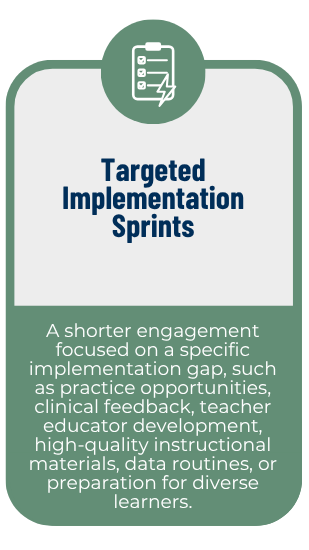
EdPrep Partners provides hands-on technical assistance to help programs implement prioritized changes in how candidates are prepared. Implementation support alongside programs may focus on:
- Strengthening literacy coursework, assignments, and structured practice opportunities for candidates to analyze, rehearse, enact, and receive feedback on evidence-based instruction
- Aligning coursework, clinical experiences, observation tools, and candidate performance evidence
- Developing literacy-specific look-fors, coaching tools, and feedback routines
- Supporting faculty, clinical supervisors, and mentor teachers to model, coach, and reinforce evidence-based literacy practices
- Building data routines to monitor candidate development, implementation progress, and readiness evidence
- Strengthening P-12 partnerships so preparation is connected to the instructional practices candidates will use with students
This work is more than alignment. It is the work of improving courses, tools, routines, and supports so candidates are better prepared to teach reading well.
Models for State and Regional Action
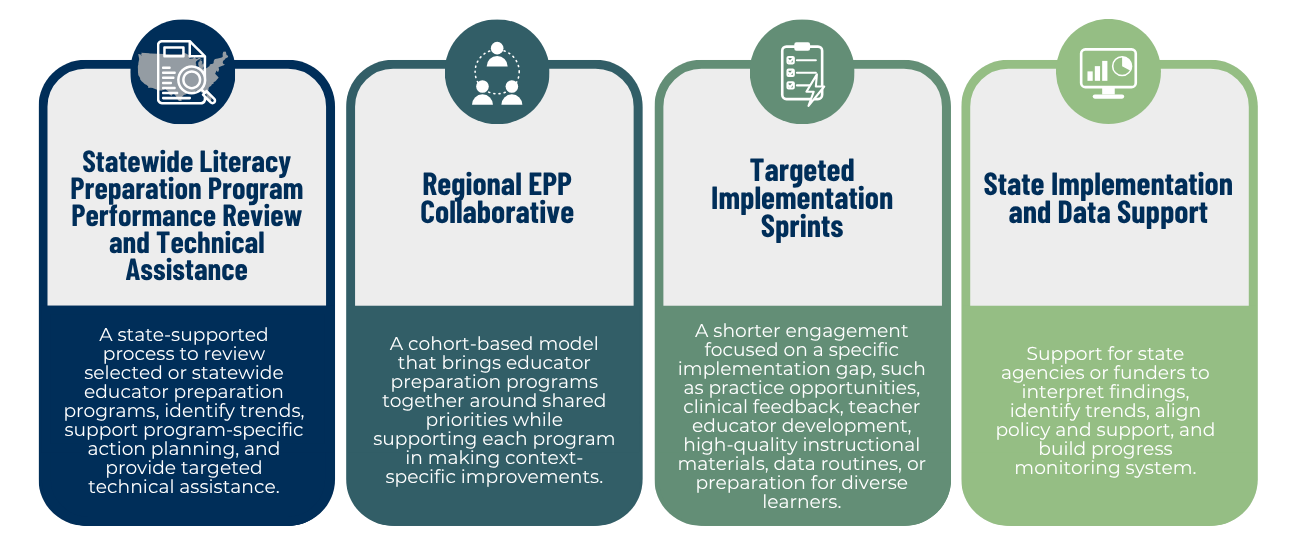
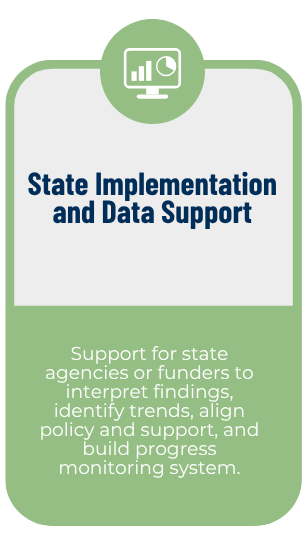
EdPrep Partners supports this work through several models for action and improvement:
Current Partnerships in Practice
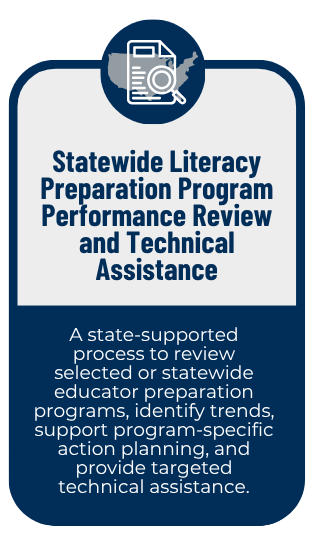
In Delaware, EdPrep Partners is working alongside the Delaware Department of Education on a statewide Science of Reading Literacy Review and Technical Assistance Initiative. The work connects policy, preparation, and P-12 practice through program reviews, prioritized recommendations, strategic action planning, and technical assistance.
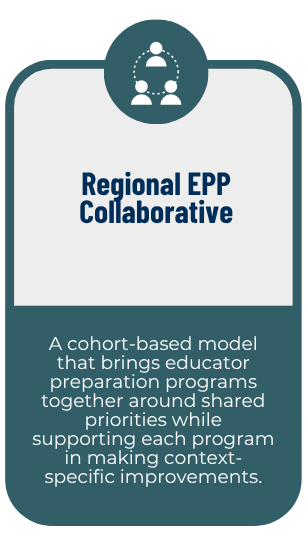
In Michigan, the Michigan EPP Collaborative uses a cohort-based improvement model that includes visioning, program reviews, strategic action planning, technical assistance, and cross-program convenings. The model builds shared learning across institutions while supporting each program in making context-specific shifts that strengthen candidate readiness.
Both efforts reflect a shared belief: Every child deserves an excellent educator. So let’s give them one.
From Preparation Policy to Candidate-Ready Practice
The next phase of reading reform will depend not only on strong policy or aligned coursework, but on preparation systems that help future teachers teach reading well.
States and regions need practical ways to understand how literacy preparation is actually experienced by candidates across coursework, clinical practice, teacher educator support, and program improvement systems. They also need ways to identify the shifts that matter most, support programs in prioritizing those shifts, and build the conditions for focused, sustainable improvement.
That work requires shared expectations, clear evidence, thoughtful prioritization, and implementation support that respects local context while keeping candidate readiness at the center. It also requires partnership with the people closest to the work: program leaders, faculty, clinical supervisors, mentor teachers, district partners, and candidates themselves.
EdPrep Partners works alongside states, regions, funders, and educator preparation programs to support that work together.
From findings to action. From preparation to practice.
Every child deserves an excellent educator. Every teacher candidate deserves preparation that equips them to become one.
Let’s make teacher preparation better together.
Stay Connected
If you're interested in learning more, exploring collaboration or technical assistance, or just want to catch up, we’d love to connect:

About EdPrep Partners
Elevating Teacher Preparation. Accelerating Change.
EdPrep Partners is a national technical assistance center and non-profit. EdPrep Partners delivers a coordinated, high-impact, hands-on technical assistance model that connects diagnostics with the support to make the changes. Our approach moves beyond surface-level recommendations, embedding research-backed, scalable, and sustainable practices that most dramatically improve the quality of educator preparation—while equipping educator preparation programs, districts, state agencies, and funders with the tools and insights needed to drive systemic, lasting change.